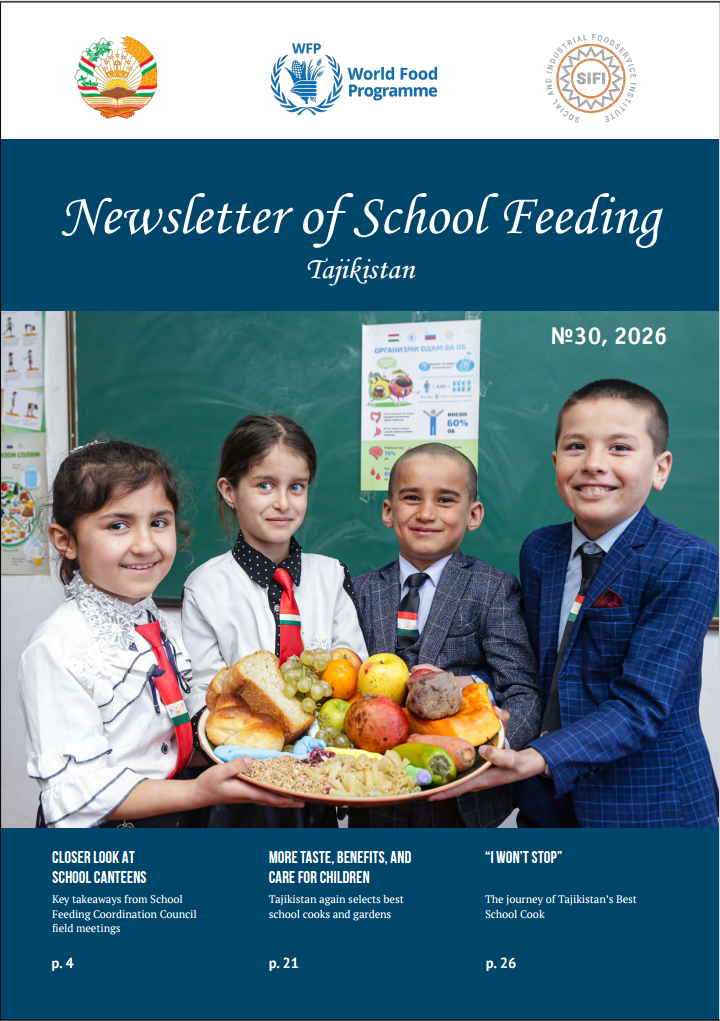
On May 18, the international meeting titled “Sustainable School Feeding Programmes in the Global and Regional Context” opened in Yerevan. The event brought together representatives from Armenia, Kyrgyzstan, Tajikistan, the United Nations World Food Programme (WFP), the WFP Centre of Excellence Against Hunger in Brazil, and the Social and Industrial Foodservice Institute (SIFI), the CIS Base Organization for School Feeding.
The discussions focused on school feeding as an important public investment in children’s health, education, and future. Today, school meals are increasingly viewed not simply as a daily lunch, but as part of a broader system that helps children learn more effectively, supports families, strengthens local agriculture, and contributes to food security.
The opening ceremony took place at the Best Western Plus Congress Hotel. Welcoming remarks were delivered by Robert Abisoghomonyan, Deputy Minister of Foreign Affairs of the Republic of Armenia; Araksia Svajyan, Deputy Minister of Education, Science, Culture and Sports of the Republic of Armenia; Leila Meliouh, WFP Representative and Country Director in Armenia; and Satenik Mkrtchyan, Director of the School Feeding and Child Welfare Agency.
The central event of the first day was a panel discussion moderated by Arevik Anapiosyan from the Office of the UN Resident Coordinator in Armenia. Participants discussed the key elements needed to build a strong national school feeding system, including effective governance, sustainable financing, quality products, modern standards, and cooperation with local producers.
Daniel Balaban, Director and Representative of the WFP Centre of Excellence Against Hunger in Brazil, spoke about the School Meals Coalition. SIFI President Vladimir Chernigov, in turn, presented Russian and regional experience in organizing child feeding programmes and emphasized the importance of professional exchange between countries.
Particular attention during the meeting was given to Tajikistan’s experience. The country is represented at the event by Deputy Minister of Education Badriddin Muzaffarzoda. During the panel discussion, he spoke about Tajikistan’s journey in developing school feeding and the steps that are helping the country gradually build a sustainable national system.
As Mr. Muzaffarzoda noted, the School Feeding Programme in Tajikistan began in 1999 as a small pilot initiative. Over time, it expanded significantly: since 2013, school meals have reached around 50% of primary school children — approximately 2,000 schools and more than 400,000 children.
An important foundation for further development was established with the adoption of the School Feeding Concept in 2015 and the School Feeding Development Strategy through 2027, approved in 2017. Another major milestone came in 2022 with the adoption of a five-year State School Feeding Development Programme. For the first time, targeted funding from the state budget was allocated for piloting the programme.
Today, programme funding in Tajikistan continues to grow steadily. More than USD 8 million is allocated annually for food procurement alone. Around 200 schools are already financed directly from the state budget, and successful practices developed under the state programme are gradually being expanded to other schools across the country.
According to Mr. Muzaffarzoda, sustainable school feeding is not only about policies and strategies. It also requires a clear management system, domestic financing, trained personnel, and continuous quality control. In Tajikistan, a dedicated school feeding department has been established within the Ministry of Education to coordinate programme implementation and monitor its delivery. Since this year, similar units have also been operating in all provinces of the country.
Staffing at the school level is also considered a key priority. Positions, including cook, assistant cook, and dietitian/medical worker, have been added to the staffing structure of general education schools. This helps improve the quality of school meals and ensures that food provided to children is safer, healthier, and more nutritious.
Armenia’s experience was also highlighted during the meeting. Armenia is demonstrating a school feeding model built on national ownership and close links with local production. The Programme includes visits to schools developing intensive orchards, greenhouses, and other initiatives aimed at making children’s diets more nutritious, diverse, and sustainable.
In the following days, participants will visit schools in the Gegharkunik marz and the town of Abovyan, learn more about Armenia’s national school feeding model implemented under the state initiative “300 Schools, 500 Kindergartens,” and visit a training centre for wholegrain baking products as well as a wholegrain mill in Ijevan.
The meeting in Yerevan continues the international exchange of experience between Armenia and Brazil. Earlier, an Armenian delegation studied Brazil’s national school feeding programme, including local procurement systems, food education, and effective management approaches. Armenia is now hosting its partners to showcase its own solutions and discuss how countries can support one another in strengthening school feeding systems.
Such meetings are important not only for experts. Their outcomes are directly linked to children’s quality of life. The stronger a national school feeding system becomes, the more schoolchildren receive nutritious, safe, and healthy meals every day. This, in turn, gives them greater opportunities to learn, grow, and succeed.