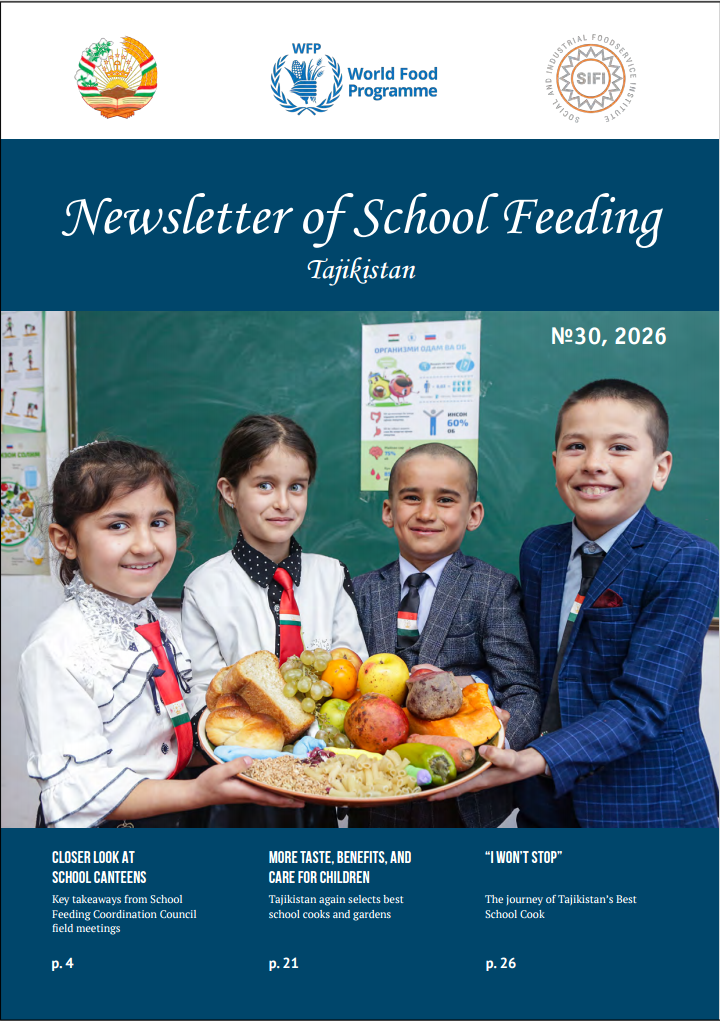
Schools will demonstrate how homegrown harvests can become part of healthy and diverse school meals
This year, Tajikistan will host the fourth edition of the Best School Garden competition. Schools participating in the UN WFP’s School Feeding Programme that have a plot for growing vegetables and herbs or a greenhouse are invited to participate.
The competition will bring together children, teachers, parents, local communities, and experts around a shared idea: a school garden can serve not only as a learning space but also as a practical resource for improving the diversity of school meals.
The 2026 theme, A Dish from Our School Garden, will guide participants through the entire process, from planning what to plant to preparing a dish using their own harvest. Schools will select crops based on local climate conditions, water availability, and site capacity, grow them, and demonstrate how these ingredients can be incorporated into school menus.
The competition is organized by the World Food Programme, the Ministry of Education and Science of the Republic of Tajikistan, and the Social and Industrial Foodservice Institute (SIFI), which acts as the CIS Basic Organization for School Feeding.
From garden to plate
This year’s competition places a strong emphasis on the practical value of school gardens. Its core objective is to highlight the link between growing food and improving the quality of school meals.
Together with teachers and parents, children will cultivate plots, care for plants, monitor growth, harvest crops, and participate in the cooking process, tasting sessions, and themed school events.
This hands-on approach will help children see how food goes from seed to plate, value what they grow, and understand why a varied diet matters for their health.
Full agricultural cycle
The competition will run through November 2026, allowing schools to complete the full agricultural cycle, from soil preparation to final presentations.
Registration is open until June 30. Schools wishing to participate should complete and submit an application to ozmunibogdori@gmail.com .
From June to August, schools will focus on planting, crop care, protection, and interim reporting.
From September to October, participants will harvest their crops, prepare dishes, and organize tasting sessions, themed lunches, and other final activities.
In November, a jury will evaluate the projects, select finalists, and announce the winners.
Support for participants
This year, schools will benefit from enhanced methodological support. Participants will attend three training webinars led by agronomy experts, covering crop planning and soil preparation, plant care and water-saving practices, as well as harvesting, storage, and the safe use of produce in school meals.
Project submissions
Each school will submit a project presented as the story of its garden or greenhouse. The application should describe the selected plot, crops grown, stages of work, involvement of students and adults, challenges encountered, and how they were addressed.
Particular attention will be given to how the harvest was used: whether the produce was incorporated into school meals, included in cooking classes, tastings, harvest festivals, or themed lunches.
For children in grades 1–4, a creative assignment titled A Dish from Our Garden will be included, in the form of a drawing or group artwork, with a short explanation. Students in grades 5–11 will write an essay reflecting on the crops they selected, teamwork, and the dish they prepared using their harvest.
Nominations and awards
Winners will be selected in two nominations:
Best School Garden
Best Greenhouse
Winners in each category will receive grants of 10,000 somoni to further develop their school-based agricultural initiatives. Schools placing second and third will receive technical equipment valued at 5,000 and 2,500 somoni, respectively.
The organizers may also introduce additional nominations to recognize the most innovative, sustainable, and creative practices.
More than just a garden
The competition helps children gain practical skills while introducing them to organic farming principles, responsible water use, seasonality, and the basics of healthy eating.
For schools, it offers an opportunity to transform a garden plot or greenhouse into a dynamic learning environment where children observe, collaborate, and see the tangible results of their work.
The competition is expected to expand the practice of school gardening across provinces of Tajikistan, spark greater interest among children in growing food, and generate strong examples that can be shared and scaled.